

You’re starting or adjusting HRT in Chicago, and you’re trying to feel like yourself again. Then you step on the scale and think, “Wait, how did that happen?” One number can flip your mood in seconds, even when your jeans fit better and your face looks less tired.
Here’s the tricky part: HRT can shift water, fat, and muscle at the same time. The scale may not match what you see in the mirror, especially early on, or after a dose change. That doesn’t mean you’re doing something wrong.
This post gives you a calm, repeatable way to track real body change without panic. You’ll still use the scale for Weight Loss support, but you won’t let it boss you around.
Why the scale can lie on HRT (and what that number can’t tell you)

Scale weight is a mix of many things: body fat, muscle, water, food still digesting, and even constipation. On HRT, that mix can change fast.
A normal day-to-day swing can be 1 to 4 pounds, even if you eat the same way. After a salty meal, a bad night of sleep, a stressful week, or a harder workout, you might see a bigger bump. That jump usually isn’t fat.
If you want a deeper look at why weight can feel confusing during hormone changes, this guide can help you frame it with less fear: Understanding Weight Changes on HRT.
Water retention, bloating, and hormone shifts can look like fast weight gain
Water weight is the scale’s favorite trick. It shows up quickly and leaves quickly, which is why it’s so good at messing with your head.
Common reasons the scale climbs on HRT (even when your habits are solid) include:
Estrogen-related fluid shifts: Your body can hold more water while it adjusts, especially after starting, stopping, or changing dose.
Salt and carbs: More sodium pulls in water. Higher carbs also store as glycogen, and glycogen carries water with it.
Stress and poor sleep: Stress hormones can increase water retention and cravings. One rough week can look like “weight gain” overnight.
Workouts and soreness: Strength training causes tiny muscle tears (that’s how you get stronger). Your body sends water to heal them, so the scale rises.
Constipation: It’s not glamorous, but it’s real. Slower digestion can add pounds on the scale without changing your body fat.
Cycle-related bloat (if you still cycle): Many women notice predictable puffiness and breast tenderness at certain times.
Think of water like Chicago weather. It changes fast, it doesn’t ask permission, and it doesn’t mean the season has changed.
Fat redistribution and muscle changes can hide progress on the scale
HRT can change where fat sits on your body. You might notice less “middle” fullness, or a softer shift toward hips and thighs, even if the scale stays stuck.
At the same time, if you’re lifting weights, walking more, or doing Pilates, you can add muscle while losing fat. Muscle is denser than fat, so your shape can change without a big weight drop.
That’s why you can look smaller at the same weight. Your body is re-arranging, not failing.
How to use the scale the right way (so it helps your Weight Loss goals)
The scale isn’t the enemy. It’s just a tool with a loud voice. Your job is to turn that voice into something useful.
If you weigh in randomly, you get random emotions. If you weigh in consistently, you get a trend you can trust.
A simple weigh-in routine that cuts out most of the noise
Pick a routine that’s boring on purpose. Consistency beats perfection.
A reliable method looks like this:
- Weigh in first thing in the morning
- Use the bathroom first
- Weigh before food or drink
- Wear the same clothing level (ideally none)
- Use the same scale, on the same hard surface, in the same spot
- Either weigh daily and use weekly averages, or weigh 3 times a week (like Mon, Wed, Fri)
If daily weigh-ins make you spiral, don’t do them. Three times a week is enough to see direction without feeling trapped by the number.
What to look for instead of day-to-day ups and downs
Single weigh-ins are like one frame of a movie. You need the whole scene.
Use a weekly average, then compare it across time. Give yourself at least 4 weeks before you judge results, and 8 weeks is even better when hormones are shifting.
Here’s what that looks like in plain English:
- Week 1 average: 168.6
- Week 4 average: 166.9
That’s a real change, even if you had a few mornings where the scale flashed 170 after a salty dinner.
Also, “plateaus” are often water masking fat loss for a week or two. If your workouts got harder, your stress spiked, or your sleep fell apart, your body may hold water while still changing underneath.
If you’re in the menopause transition and you want clarity on what stage you’re in (because that matters for symptoms, sleep, and body changes), use this as a reference point: Perimenopause vs Menopause Differences.
Measurements and other trackers that show real body changes on HRT
When you want the truth about body shape, measurements are the calm friend who tells you what’s real.
Pair the scale with two or three other trackers so you don’t get fooled by water shifts. Good options include: a tape measure, progress photos, clothes fit, strength changes, and short symptom notes.
How to take body measurements that you can trust
Measurements work best when you treat them like a mini lab experiment. Same method, same conditions, each time.
Use this simple system:
- Use a soft tape measure (fabric tailor’s tape).
- Measure on the same day and time (many women choose Saturday morning).
- Stand tall with a relaxed posture.
- Measure on bare skin or thin clothing.
- Don’t suck in, don’t flex, don’t pinch the tape.
- Pull snug, not tight.
- Write it down right away.
The most useful spots for HRT-related shape changes:
- Bust or chest (whichever makes sense for your body)
- Underbust (helpful if bra fit is changing)
- Waist (at your natural waist, or at the narrowest point)
- Hips (widest point over the glutes)
- Thigh (same side each time, mid-thigh)
- Upper arm (same side each time, midpoint)
How often should you measure? Weekly is fine if you stay calm about it. Every two weeks is often easier, and still catches real trends.
Non-scale wins that matter on HRT: photos, clothes fit, strength, and how you feel

Progress photos sound intimidating, but they’re one of the clearest reality checks you can use. Take them every 2 to 4 weeks:
- Front, side, and back
- Same lighting
- Same outfit (sports bra and shorts, or a fitted tank and leggings)
- Same distance from the camera
Clothes fit is even easier. Pick one “check item,” like one pair of jeans or one bra, and try it the same way each month. If it fits better, your body is changing, even if the scale is stubborn.
Strength markers matter too, because muscle supports metabolism and protects your joints:
- How many squats you can do with good form
- Your dumbbell weight for rows or presses
- How fast you recover after a long walk on the lakefront
- Whether stairs leave you winded
Finally, track how you feel, because HRT is often about quality of life:
Write one quick weekly note on sleep, mood, energy, and symptoms like hot flashes, night sweats, cramps, headaches, or joint aches. If your mood feels more fragile during dose changes, you’re not imagining it. This overview can help you connect the dots: Hormones Impact on Women’s Mental Health.
Your 10-minute weekly tracking plan (and when to call your HRT provider)
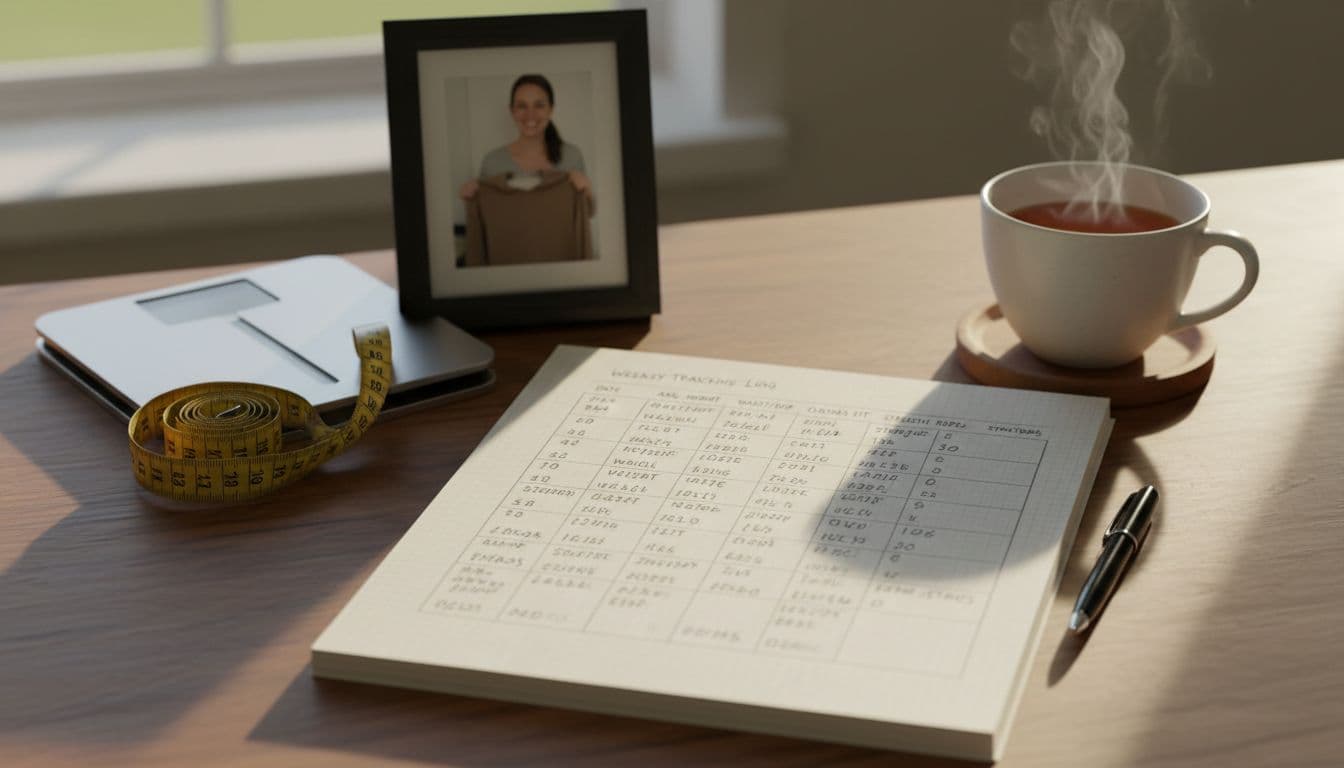
A strong tracking plan should feel like brushing your teeth. Quick, steady, and not full of drama.
Set a timer for 10 minutes once a week. You’re collecting evidence, not grading yourself.
A simple weekly log you can stick with
Use this template and keep it in one place (notes app, notebook, or spreadsheet). Review monthly, not daily.
What you trackWhat you recordHow oftenWeekly average weightAverage of your weigh-insWeeklyMeasurementsWaist, hips, underbust (or bust)Weekly or every 2 weeksCheck-clothes note“Jeans: buttoned easier”WeeklyStrength check“Rows: 20 lb x 10 reps”WeeklyPhotosFront/side/back setMonthlySymptoms and mood2 to 3 sentencesWeekly
After 4 weeks, look at the big picture: average weight trend, waist and hip change, photo comparison, and how you feel. That’s where the truth sits.
If you want support tailored to your symptoms and life in Chicago, structured follow-up matters. This is where a dedicated visit can help: Menopause Counseling and Management Services.
Signs you need medical advice, not a new diet plan
Some changes aren’t a tracking problem. They’re a medical check-in.
Contact your clinician promptly if you notice:
- Sudden or extreme swelling (especially in the face, hands, or legs)
- Shortness of breath
- Chest pain
- Severe headaches that are new or worsening
- New leg pain or one-sided leg swelling
- Heavy bleeding, bleeding after sex, or bleeding that feels off for you
- Mood changes that feel unmanageable
- Rapid, unexplained weight change that doesn’t match your habits
Bring your log to the conversation. It helps your provider adjust your plan with more confidence. It also helps you talk about Weight Loss goals in a way that fits your hormones, sleep, and stress, not just calories on paper.
If you’re unsure whether it’s time for an extra visit, this age-based guide can help you make that call: https://wohcc.com/when-to-see-a-gynecologist-by-age/
Conclusion
The scale can be useful, but it’s only a trend tool. Measurements tell you about shape, and photos and clothes fit tell you about real life. When you put them together, you stop getting fooled by water shifts and short-term noise.
Give yourself patience while your body adjusts to HRT. Stay consistent, track calmly, and trust what the full set of data is showing you, not what one morning weigh-in tries to claim. Pick 2 to 4 tracking tools, commit for 8 weeks, and bring your log to your next appointment so you can get better guidance and make changes with confidence.
